
Sciatica… Many of us experience it at some point in our lives. It’s a royal pain in the butt, literally.
At best, it’s some tingling or some occasional pain/sensation shooting down the legs that comes and goes.
At worst, it has you bent over hissing in pain at every move and a good night sleep is just a sweet memory to cherish.
So what do we know about this beast of a condition and what are we going to do about it? Mr Google will tell you the basics, and that treatment and recovery can last many months. It’s not very encouraging to be honest. But just how correct is this? Here’s the lowdown on sciatica, and everything you never knew you wanted to know about it.
The sciatic nerve is a major long nerve that runs from the base of your spine down the back of the legs, passing through the pelvis and the butt muscles, weaving out from behind your Piriformis muscle (more on that happy little fact in a minute). It helps with leg movement, and sensations in the leg. It’s your messenger between your brain and your legs. Cool stuff, huh?
However, nerves have this tendency of getting compressed, pinched etc. One day you may wake up and your hips are sore, your legs are on fire, and you can barely move without heavy painkillers.
Enter SCIATICA.
You’ll likely run (hobble) to the doctors (and fair enough). They will diagnose you with Sciatica upon hearing your symptoms, hand you painkillers and pass you onto a physiotherapist, who will give you a sheet of exercises. Sounds familiar, I’m sure.
But let me complicate things for you, for the purpose of better understanding on what actually goes on in your body, because of course it is not as simple as that. And I bring you good news with it I promise! Knowing more details on this condition can help you enormously in getting the best suited treatment that can actually make a huge difference in your recovery.
Here’s the secret: not everything sciatica shaped is sciatica. Sciatica is a convenient umbrella term for everything that creates an issue with the sciatic nerve, but there are several other conditions that have the same symptoms, and it matters a lot to know which one you have exactly as they all need different approaches. For the best chance of recovery, it pays well to know what is exactly going on in your body.
SCIATICA is nerve pain caused by a nerve compression in the lower spine. Spinal stenosis, herniated or bulging disc, a bone spur, certain disc conditions, lower back injury or general wear and tear that can make this happen. So it specifically relates to your spinal vertebrae misbehaving, compressing and causing the inflammation of the sciatic nerve right where it leaves the spinal cord. That will create the signature shooting pain down the leg.
PIRIFORMIS SYNDROME is where the sciatic nerve gets compressed by the piriformis muscle on your butt right after it exits the spinal cord. When the piriformis muscle is stressed by overuse or injury, it tightens around the sciatic nerve and can produce sciatica-like symptoms. Usually, the nerve passes underneath the piriformis, but for some unlucky people it passes directly THROUGH the muscle, so that can create a disposition to sciatic issues. But even if the nerve passes behind it, inflammation and muscle tightness can still get you the same way.
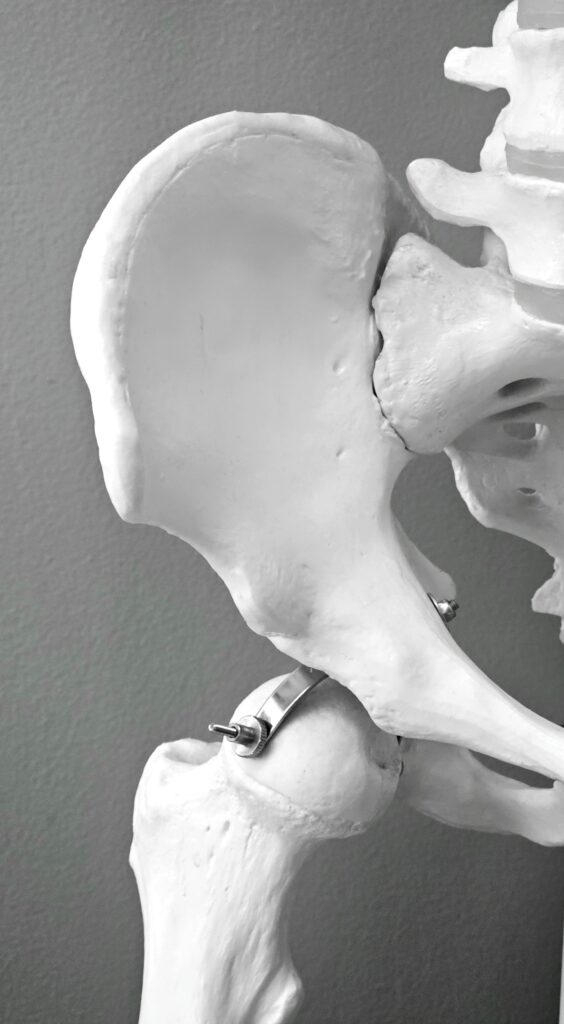
SI JOINT DYSFUNCTION is another condition that creates the same symptoms as sciatica even though it is not actually compressing the nerve itself. This joint is where the bottom of your spine and your hip bone connects, and it absorbs and transfers the upper body weight onto your legs. Stabilised by some muscles and ligaments, a lot can go wrong here, as it’s really heavily used. Degeneration, injury, inflammation, misalignment are all very common. Pregnant women can be especially susceptible to SI joint disfunction as the hormone changes soften it to prepare for the hip opening for childbirth.
Any of these three can be the cause of your sciatic pain. Individually, or in a delightful soup of complex tandem.
In my years of treating people with sciatic pain, my experience is that most cases are muscle tension related (Piriformis syndrome or SI joint dysfunction). Which is great news, because it can be relieved by specialised massage to ease muscle tension and loosen up the whole hip area, encouraging mobility and hip balance. In some cases, where the sciatica is actually spinal based, treatment can be trickier. If I find that is the likely case, I’ll encourage a doctor visit to ask for some investigation to see what is going on with the vertebrae. But even in these cases, gentle massage at the lower spine can relieve muscle tension that would be likely contributing to the pain, and we can even gently manipulate the vertebrae to see if we can relieve some of the compression. I had good results with this as well, though relief may be shorter term and the issue may not get resolved so easily.
That’s it in a nutshell, trying to bring some clarity to all those suffering from sciatica, and encouragement that a good massage therapist/physio who understands the condition could be your best ticket to quick pain relief and actual recovery.


